Who I am, and why this exists
AreWeMe is one person's ten-year question, tested first on one relationship. This page says who, and why it is built the way it is.
How I got here
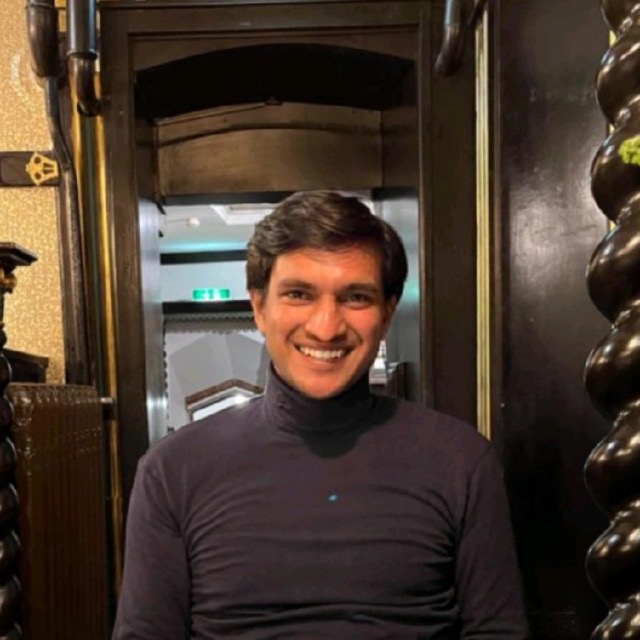
I'm Tanay. I did my PhD at Inria, France's national research institute for computer science, in Sophia Antipolis, teaching machines to read behaviour, emotion and personality from what people do: video, voice, the small signals of a conversation. The thesis received the second prize in its field at Université Côte d'Azur, which I took as a sign that the question mattered to more people than me. After it I stayed at Inria as a research engineer on two clinical projects, MePheSTO and GAIN, reading the same signals where they matter most: with patients, and the people who care for them. Before all of that, an engineering degree at BITS Pilani and a thesis internship at the Indian Institute of Science in Bangalore.
Years of measuring behaviour taught me two things. Behaviour depends on the room: the same person is one way with their family, another at work, a third with the person they love, and asking someone to describe their own behaviour, or asking the people around them, is biased in both directions. And underneath the behaviour there are things that do hold: what a person believes, what they value, how they think. Those predict behaviour, and most of what we call personality, far better than a photograph of one afternoon.
I have been looking for a way to reach those things for about ten years, since my bachelor's. AreWeMe is the first real product to come out of that question: something that captures the essence of a person, can be used anywhere, and starts with one of the most fundamental things in human life, companionship.
Why beliefs, not behaviour
Think of an iceberg. What shows above the water is behaviour: what you say, what you do, how you react. What holds it up, below the water, is what you believe, what you value, how you see the world and how you think. The patterns in the visible part are explained by the hidden part, so that is where AreWeMe asks its questions. What I wanted to reach are the thoughts behind what a person does, the words they actually think in; that is what the questions ask about.
To make sense of the answers it draws on three traditions at once. Philosophy, for the questions worth asking about how to live. Sociology, for how beliefs connect people to each other and to the world around them. Psychology, for how beliefs and values show up in behaviour, and what that means over time. Together they let a reading connect what you said to what it means, instead of handing you a label.
It also changes how you think when it counts. When a problem arrives, emotions run high and thinking about everything at once is hard. AreWeMe asks you to think about the small things that make up your thinking beforehand, one question at a time, so that when something comes up you already hold the relevant pieces, and the conversation can be productive instead of going in circles.
The first couple it was tested on
I met my wife in India, in a short break after my PhD. We tried an early version on ourselves, mostly to see what it would do, and became the first two people ever to finish every topic. It gave us conversations we would not have had on our own: nothing had to be brought up, the questions did it, and by the end we understood each other, saw each other for who we are, and could see what a life together would look like. That understanding is a large part of why I married her, and her support is what keeps me going when I doubt.
It is also where the couple use of AreWeMe came from. I did not design it for dating; we discovered it there, with a very unpolished version and a first user who was not convinced to begin with. One couple proves nothing. It is the reason the product exists.
Your answers, and who sees them
Your answers are personal: what you believe about money, family, your own life. So the promise is plain. The analysis is done by an algorithm we wrote and tested, not by an AI forming opinions about you. A language model is used for one job, writing the prose of your reading, and it is given only your answers and the analysis of them, nothing from anyone else. It never scores you. No human at AreWeMe reads your answers. The aim is the opposite of handing your life to a machine: the reading connects what you said to what it means, and you join the dots yourself.
Where it is built
AreWeMe is built at Inria Startup Studio in Sophia Antipolis, France. Our terms and privacy policy are adapted from Inria's own ethical and GDPR consent template. The product is in English and French.
Get in touch: hello@areweme.com, or find me on LinkedIn.
Fair questions, straight answers
Is AreWeMe a personality test?
Not in the usual sense. It does not sort you into a type. It is a conversation, one question at a time, about what you believe and how you think, and the answers together build a picture of you that is real rather than labelled. Many people find it puts into words things about themselves they had not, and recognise them once the dots are joined.
Is it only for couples?
Couples are what it is built and sold for: two people answer, and a book about the two of them is written. But it works for one person too. Do a few topics on your own, in a time of change or simply as a mirror, and you get a reading of yourself. A partner can join later; nothing is answered twice.
Is it therapy?
No. It is not therapy and not for a crisis. It is a first step: awareness and understanding of what you each think, which is where any real conversation, including therapy, starts. A good start, not the whole solution.
Who is behind it?
One founder, with the support of many people met over the last decade, in an attempt to capture how complex human thinking really is.
Last reviewed 9 November 2026